

None of us like to admit that our dogs are getting older, but suddenly you are observing subtle changes in your senior dog’s day to day living. Are they gaining weight easier than in the past? Maybe they seem to be losing interest in playing or slowing down on your walks or their stamina is less than it was previously. Getting up on a couch or bed may be more challenging, or it no longer even exists in your dog’s daily repertoire. Perhaps you’ve noticed them hopping up or down the stairs when they used to move each leg independently and maybe you’ve started carrying them because you are concerned for their ability and/or safety. You are even noticing they are slower getting up from a down or a sit. When did this happen!?!
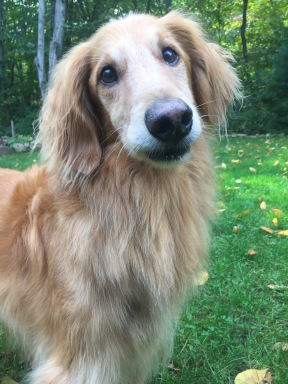
Any or all of these things happen eventually as our canine companions age, along with vision and hearing loss, balance issues, urinary issues … and these are just some of physical things we see. There are a variety of diseases that can occur as they age too. UGH!
We love our dogs as members of our family and it is often very difficult for us to watch these changes happen. If your dog has led an active life over the years than we’d like to see them continue that activity level as long as possible. If they’ve been rather sedentary much of their adult life, we cannot expect to bring them up to a peak fitness level but what we can hope for in either scenario is to slow down the effects of the aging process a bit, maintain activity, decrease muscle atrophy, and encourage a good quality of life into their golden years. Fitness exercises can help keep your dog mentally and physically active as you keep your dog thinking and moving. On top of all of this, it gives you some extra quality time with them. What are you waiting for? 😉
Some of the things to keep in mind while exercising your older pet :
• Be careful about over treating a dog that may already be gaining weight – use some of their meal in place of a “treat” while doing your exercises or do some reps of one or two exercises before serving them their meal (ex: do 3-5 down/stands and/or a 5 second sit)
• Don’t over do it- exercise for short periods, keep down the number of sets and reps, and progress slowly
Muscles that may need strengthening :
Many older dogs have a hard time using the rear and gluteal muscles to lift their back end up after laying down and will use their front limbs to pull themselves up. Therefore, strengthening both the front and rear muscles will benefit them in their day to day living. Another characteristic you might see in some dogs (young and old) is a sloped back, which means they could use some core strengthening too.
Some suggestions for exercising senior dogs :
Keep them moving…
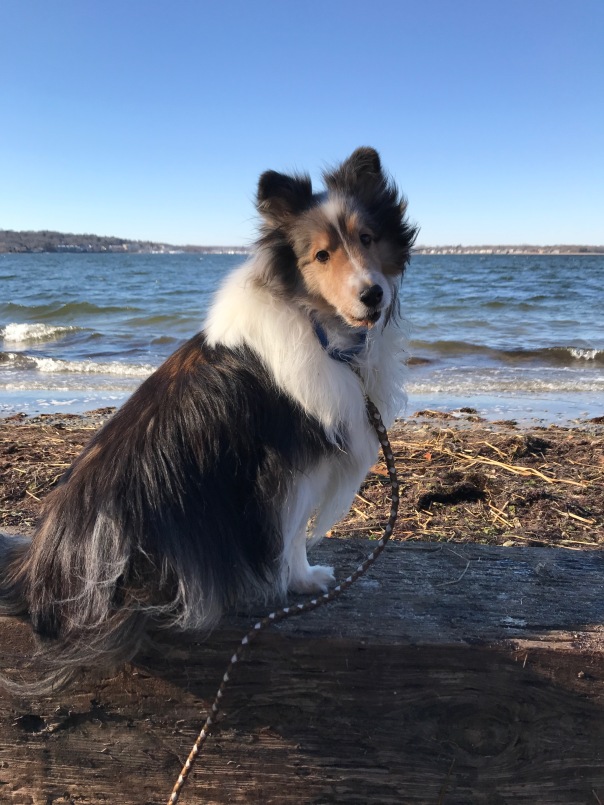
Walking
– shorten your walk, split it up into multiple walks throughout the day if possible (ex. 2-3 ten minute walks) and slow down if needed
– Depending on your dog’s fitness level while walking- limit hills and increase flat surfaces
OR walk back and forth in a zig zag path up/down an incline
Strengthening
• Sit to stand
• Folding down to a stand
Body awareness and balance
• Curb walking
• Weight shifting
• Cavalettis
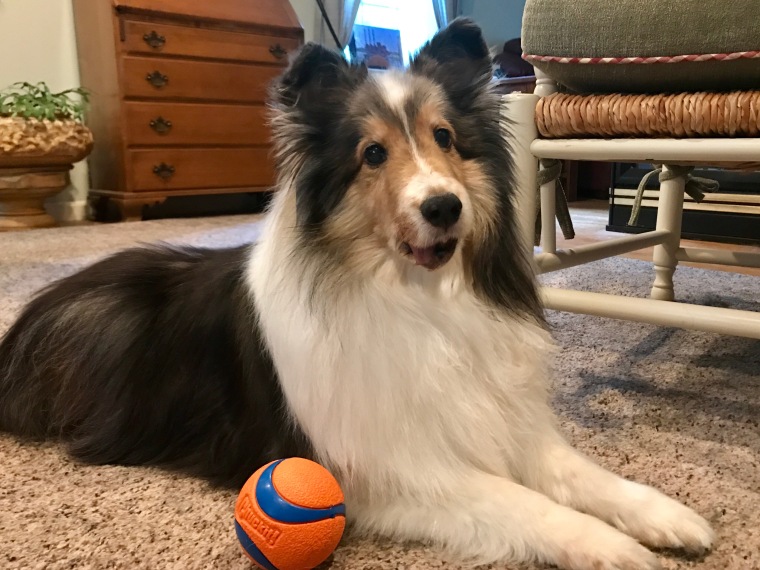
In this video, my 13 year old sheltie demonstrates some of the exercises mentioned above. Note: in the curb walking portion I’ve added in cones to help with flexibility and allow for some movement through the spine. I’ve used donut holders in place of cavalettis (with a smaller or less fit/capable dog, I would use cavalettis in order to provide something lower to step over)
As always, watch your dog for signs of Fatigue but keep in mind with our senior friends, refusal to do an exercise may mean they are in pain and not just just tired. Modify your sessions for the dog in front of you each day. For instance, the day I made the video for this post, Jive was having difficulty standing as I walked around him during the weight shifting exercises. He kept putting himself in a sit position. At first, I thought he just did not know what I wanted (even though he has done this exercise before). I let him sit and proceeded with the exercise so that he understood. When I tried the stand again, he was able to do maintain the position for a couple of reps, but then sat again. This was how we continued (and I decreased his number of reps) because this told me he could not handle the standing exercise on this particular day.
Like all seniors, taking on new challenges can bring some life to their world. Just as they have enriched our lives over the years, let’s continue to improve theirs.

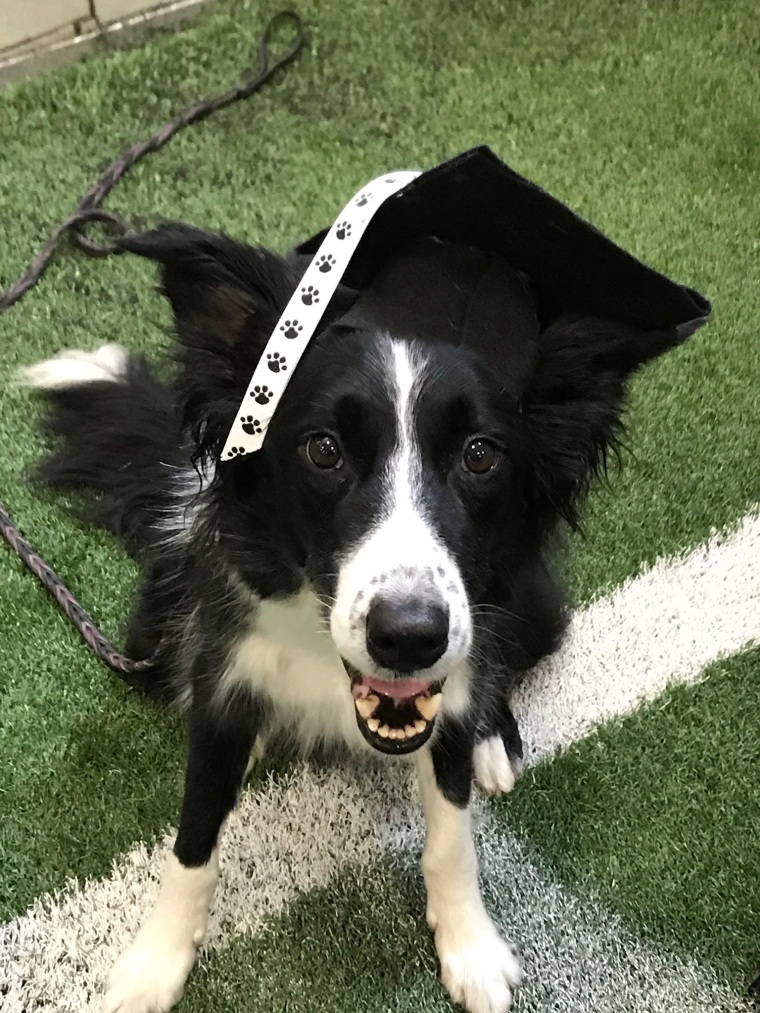


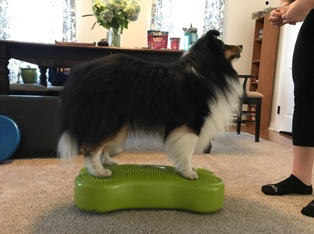 Among other things, I had Meg ask Bolt to look right and left and watch her as she walked a circle around him. These variations caused him to shift his weight in all directions while working the small stabilizer muscles in his core.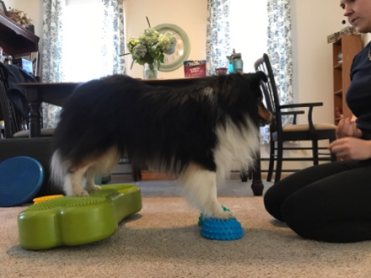
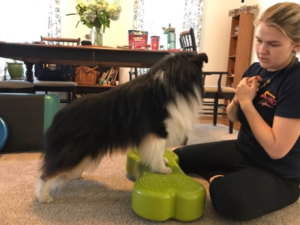 Many exercises will work more than one part of the body but often they will have a primary focus.

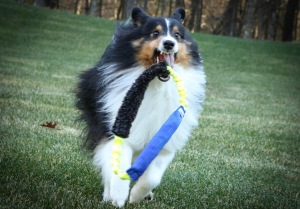
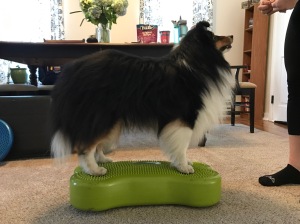
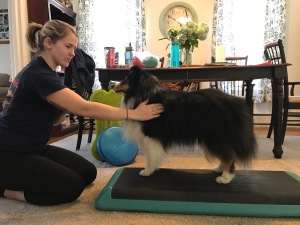 We did some simple manual weight shifting exercises- first on the ground or on a raised stable platform (such as an aerobic bench or Klimb platform).



 vet visits, x-rays, visits to specialists, dozens of phone calls, second (or more) opinions, chiropractic visits, before finally…clearance from the veterinarians and specialists to begin the slow return to activity. Even then Meg built up slowly- short walks, gentle stretching, slowly raising agility bars back to full height, more chiropractic adjustments, and yes, conditioning – all while remembering to breathe while doing it.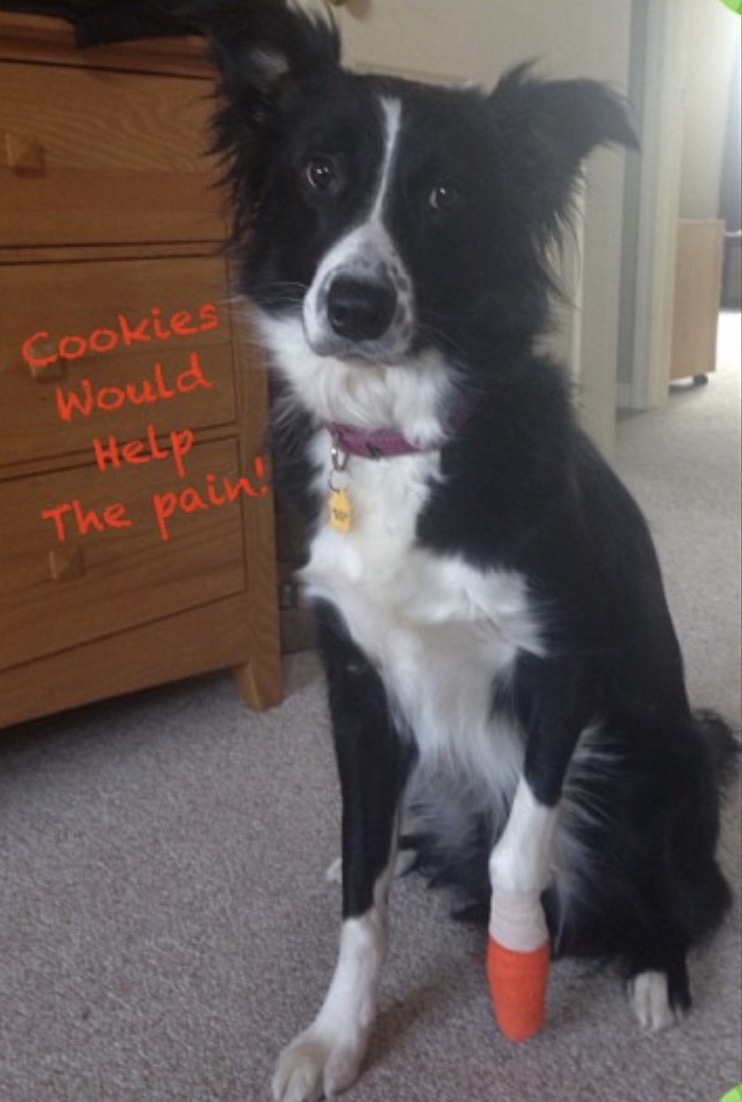
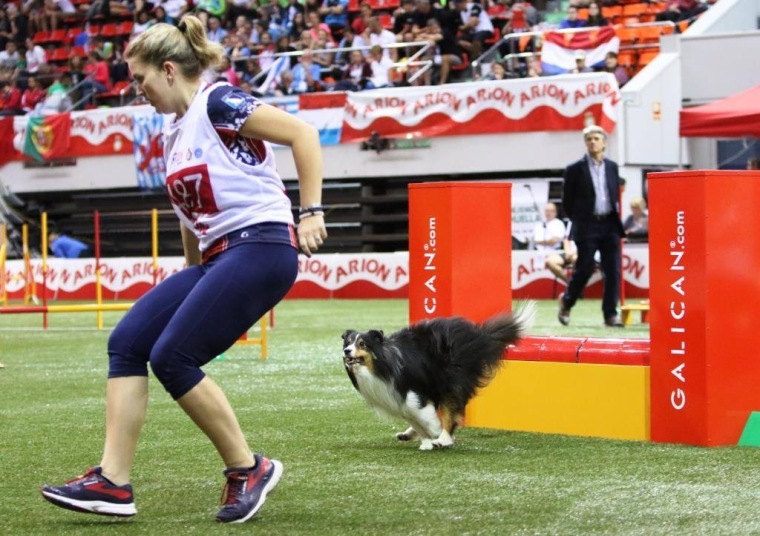
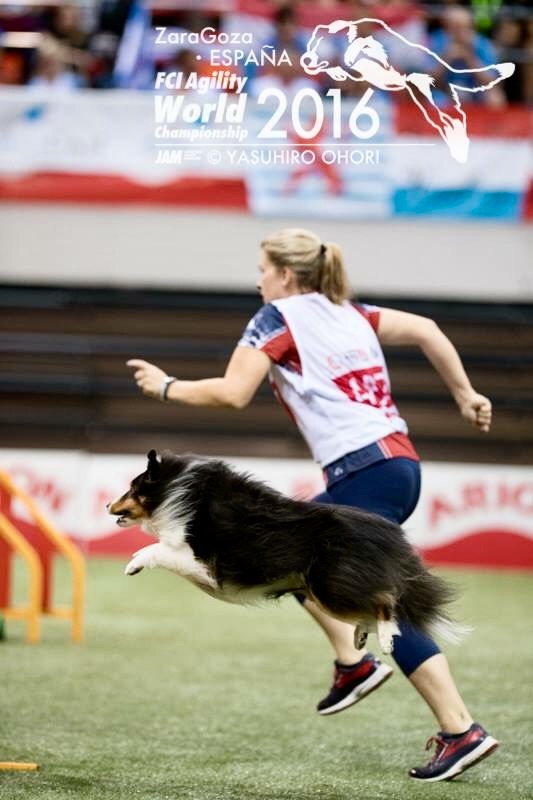
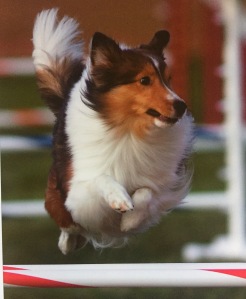 My question is why wait for an injury or a weakness to show up? We teach our dogs the necessary skills to safely navigate an agility course, turn quickly on a flyball box, or dive off a dock far or high. Why? Because we want to reduce their risk of injury by giving them (and us) the confidence to execute the skills we’ve taught, and of course, we want to do our sport well and win!
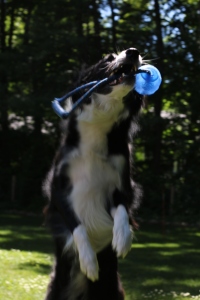 I know in agility, a wrong or late cue on my part can cause my dog to slip, slide or fall which could lead to a variety of injuries.On the other hand, they can do any of those things as they run around in my backyard or walk across my hardwood floors . They do have to be dogs though, so rather than put them in a glass box, why not at least do what I can to decrease their chances of getting hurt when these things happen.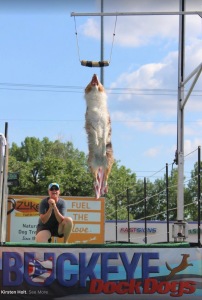


 If you’ve been following the FitPAWS Facebook page you have noticed a weekly challenge done by Pawsitive Performance and Bobbie Lyons with her team of CCFT’s. I am the instructor for week 7! This week’s challenge has three skills put together to get one fun training exercise: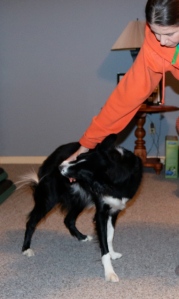


 Carolyn Close - Canine Fitness for Life