

Picture this: I am walking from my car into a store. As I walk I am browsing through my email or searching a website for a coupon. I may walk a crooked line, stumble, narrowly avoid getting hit by a car, or a number of other scenarios. This is because I am not paying attention to what I am doing and focusing on something else; my phone. If I put the phone away I can almost guarantee that none of those things are likely going to happen.
The situation is similar to what happens when we stick a treat in front of a dog’s nose to lure them into the position we would like them in. They blindly follow that treat and pay little or no attention to what the rest of their body is doing. Like us, they stumble and misstep. In the case of fitness training it can take them longer to *really* learn the proper position or body movements we are striving for.
Notice the differences in the body awareness and foot placement of the dog in the video below when using a treat to lure compared to using a hand target.
Luring can be helpful and I am not saying we should never lure. When teaching a new behavior I often use luring too, but in a different way. If you take the short amount of time it takes to teach a nose touch, a hold or a chin rest, you can use that to obtain the position you are looking for with ease. Just like any other foundation behavior, it makes future training easier to teach.
I was recently asking my young dog to target her rear feet, which she did easily (foundation behavior), however she likes to do things fast and move on. She repositioned her feet and wiggled back and forth continuously.
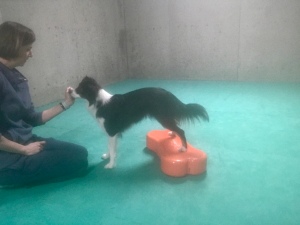
I put out my hand and asked for a nose touch and was able to have her step forward and move into the correct position. I asked for a “hold” and her feet stopped moving and she held the position perfectly. (See how this works with a chin target too. )
Previously I had used a treat that kept her dancing as she continued to try to figure out what I wanted. (Surely, just standing with two feet on this thing could not be “it”!)
So while employing the aid of a treat to lure the correct position can be used, why not try engaging your dog’s brain along with their body to get what you want and then use the treat as a reward marker. Thinking + Getting fit + Increasing the bond between you and your dog= WIN!


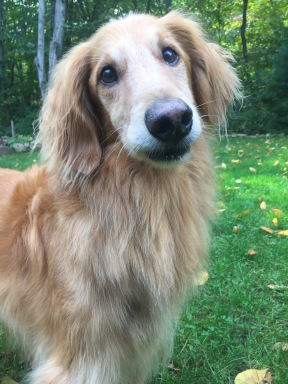
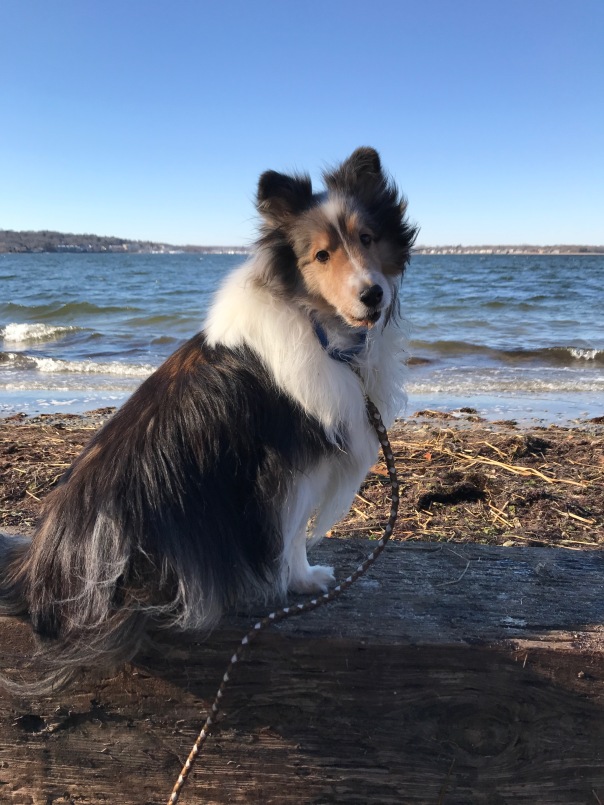
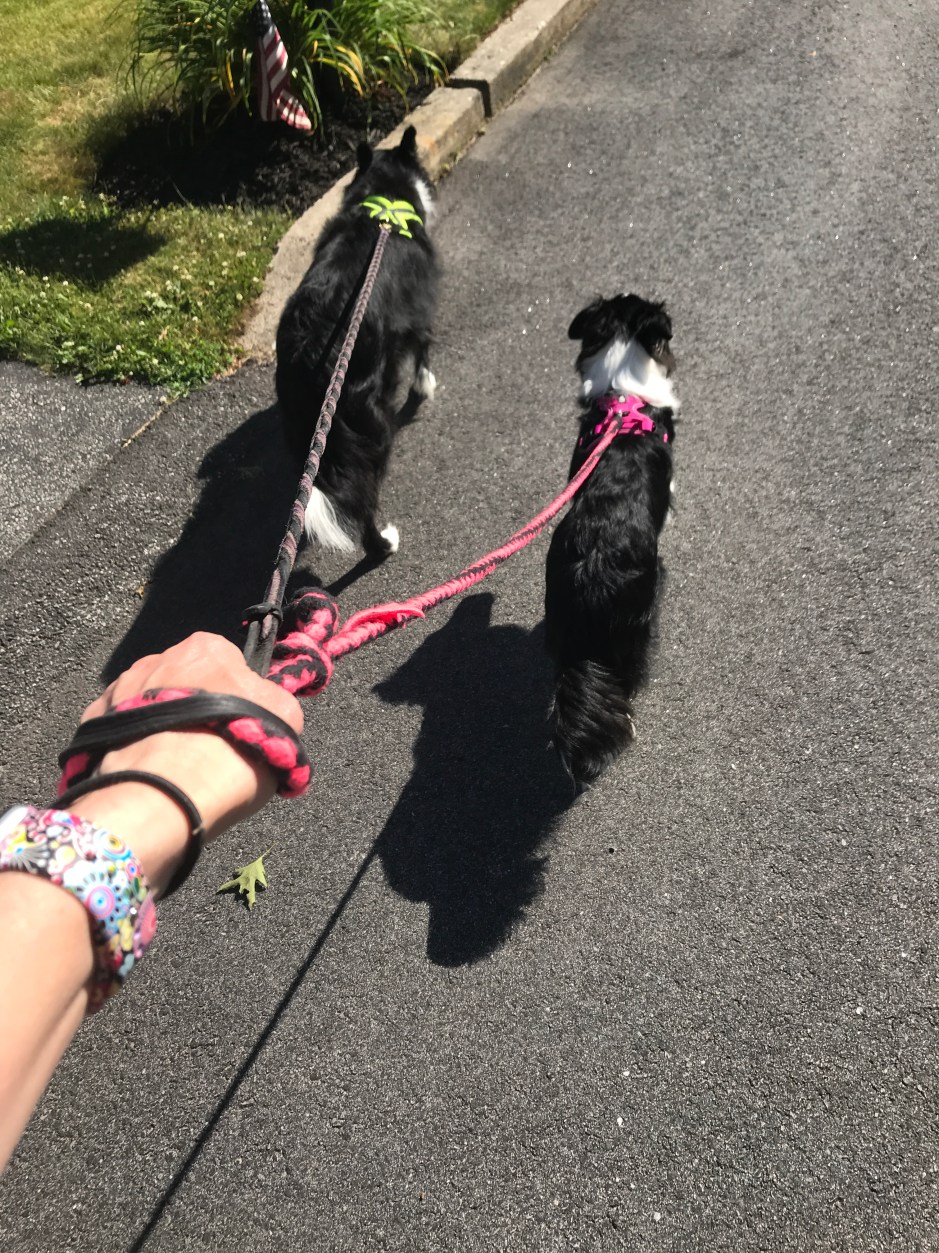

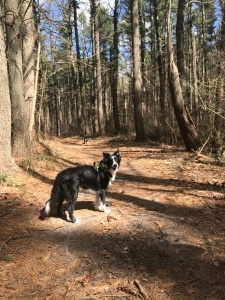 One way many of us enjoy our time while conditioning our dogs is by walking with them. In the summer heat this can be dangerous so keep in mind the temperature outdoors. More importantly, consider the temperature of the pavement. With direct sun and no wind, although the thermometer might say 77 degrees outside, the pavement temperature may be 125 degrees! (data source James J. Bergens, MD contact burns from streets and highways, Journal of the American Medical Association; 214(11): 2025-2027.) Would you want to walk barefoot on that for long periods of time? While a dog’s pads seem thicker than the soles of our feet, they can still burn. Keep in mind that the temperatures may be cooler at night, but the pavement has soaked up the sun all day. Try walking in the cooler morning hours, or better yet, take them on a hike on a wooded path where it is shaded by trees or perhaps near a water source. Not all dogs like to wade in the water, but all dogs can enjoy walking by the cooler temps by the shoreline.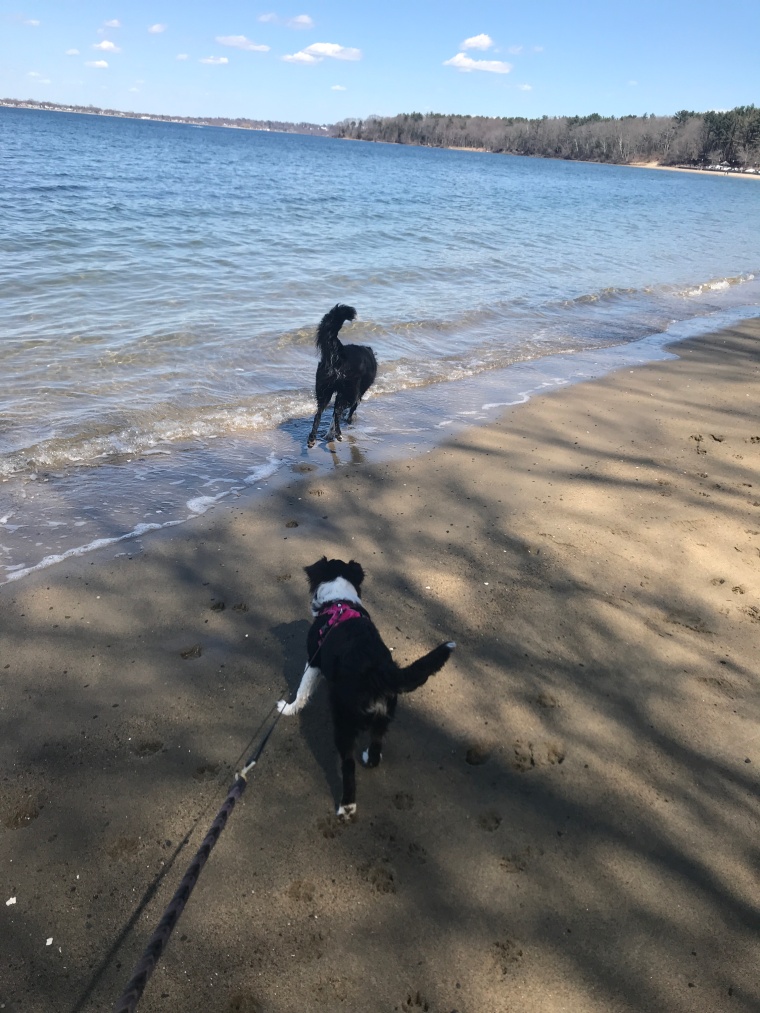
 Carolyn Close - Canine Fitness for Life